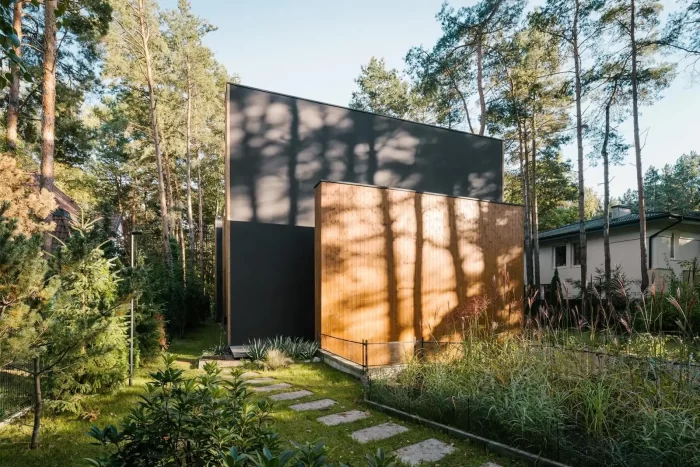
From an architecturally bold Dullstroom weekend home retreat, a Buffelsbaai beachside escape stand as testaments to their material- concrete.
these local and international homes from the VISI Archives highlight the enduring appeal of concrete in contemporary design. If you are considering using this raw and bold material in your next build. Here are twelve examples to inspire you.
12 Concrete Inspired Home Examples

Westcliff Ridge Home
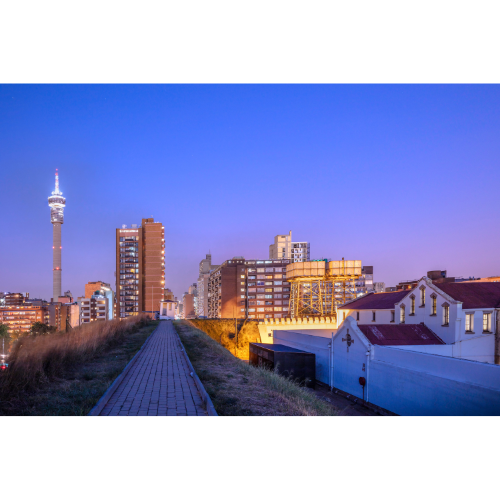
It is rare in this country that homeowners inherit a building of distinct architectural heritage, especially in a city as young as Johannesburg. So when husband and wife Silvio Rech and Lesley Carstens, spied the late-1950s house at the dead-end of their lane in Westcliff’s uppermost reaches, they kept a beady eye on its movements.
“What I liked about it is that it’s so simple. We have been over-cluttering everything,” remarks Silvio. Still, dense overgrowth concealed the view entirely, and there were those who advised the couple to simply knock it down. Architecture devotees, however, favoured retaining its roots as an American Bungalow, and when they discovered that there was, in fact, a view beyond the trees, they did what any architect would do: they respected the building’s heritage.

Buffelsbaai Home
This Buffelsbaai beachside gem most certainly lives up to that billing, ticking all the boxes for what is required to ensure that the Ferreiras’ getaways are always restful, invigorating and, quite simply, a holiday. An existing structure was demolished on this third-generation property to make way for a new home for the family. Richly reflective of the opportunities and constraints of the landscape, the design of the house was inspired by the sea and the milkwood forest that surrounds it.As lead architect Guillaume Pienaar says, the house skilfully combines “natural materials, colours and textures: natural timber, off-shutter concrete, rope and very rough-textured plaster that, over time, will disappear into the milkwood forest and fade in colour”, with an eye-catching structural design that will remain relevant and inspiring for many more generations.

Chilean House
It is a house, but only in the broadest definition of the term, says co-owner Sofia von Ellrichshausen of this structure in the foothills of the Andes mountains in central Chile. The couple built their new home in a secluded area surrounded by forest and freshwater channelled through small streams that come down from the mountains. Impressively big, it manages not to impose on its surroundings. “We call it a house, and it is our private home – but we also consider it a cultural centre, as it is meant for more than domestic use. It is a place for our creative expression, and ideally, it will live on beyond our lifetime to become a creative space for other humanist and creative people,” says Sofia.
Monaghan Farm House
This house in Monaghan Farm in Lanseria, on a beautiful spot overlooking a bend in the Jukskei River, began with a bold, Brutalist architectural idea – but the result is an incredibly subtle, sensitive response to its setting. The owners, Wendy and Lukas van Niekerk wanted a home made entirely of steel and raw, exposed concrete, and this spectacular plot of land offered them the chance to build from scratch.
Despite what Enrico refers to as its “strong architectural language”, the house they designed together is nestled into the landscape and, when viewed from higher up the hill, is practically invisible (helped by the green roofs planted with endemic grasses to recreate the landscape it’s built on). It is, quite literally, sunken into the landscape to keep its presence unobtrusive.You descend from street level to the front door via steps that lead to a path through a courtyard. The bold simplicity of the forms – the slim, straight lines of the roof and overhangs – belie the complexity of the way the house is knitted into its setting, with courtyards and “green fingers” all around bringing the landscape and vegetation up to and between the rooms.

Dullstroom Weekend Home
There’s a defining principle in modern architecture called “truth to materials”. Its aim is to celebrate the intrinsic qualities of a material without corruption, laying bare character and construction. The Fall, a weekend home outside Dullstroom, pays homage to this notion with its audacious use of concrete and its barebones appeal. “A shelter that sits crouched, backed up against the steep hill,” is how architect Paul Oosthuizen describes it. He says “shelter” as a throwback to his time spent studying the site, in awe of the thunderous water crashing into the gorge. The house was to be a refuge in direct conversation with the waterfall. “The hexahedron formation of the rock, eroded with soft edges, became a compelling navigator. I extruded these shapes out of the land; strung together like a spine, they became alive.” “I did a double take when Paul showed us his initial drawings,” says owner Anthony Hare. He and his wife Robyn have since fallen in love with the house, which has stirred mixed reactions in the Dullstroom community. The farm has been in Anthony’s family since the 1960s and is now planted with 3 hectares of cherries. “I grew up here as a young boy on fishing trips,” he recalls nostalgically. His yearning to create something exceptional on the same land has nagged for years


Masstricht Loft
The starting point for this latest project was a concrete loft in the south of the Netherlands, with a roof terrace providing great views of Maastricht’s city centre. “Every new project starts with freedom – freedom of thought and inspiration – and a story or an atmosphere,” says Dax. “That is our approach – and luckily in this instance, given their briefing, also that of our clients.” Their clients were a couple who had grown up in Maastricht. The building, originally designed as living space for local nurses – each window belonged to a single room furnished with a simple bed, desk and wardrobe – was later also used as office space. When it was first put on the market, the couple moved quickly, buying one of the apartments on the ninth floor and both apartments on the 10th floor. Along with this combination came a roof terrace with 360-degree panoramic views and, as an extra, a secret observatory/sky lounge above that.

Lanseria Eco-estate Home
The site, sun and climate were integral to the design process and we drew inspiration from these elements,” says Enrico Daffonchio, who together with Leigh Maurtin designed the home with extensive input from the owners Lukas and Wendy van Niekerk.The team were very familiar with the ecological guidelines of the estate as Daffonchio Architects had helped draft them. All of the properties are single storey, cut into the ground to minimise the impact on the horizon: The house is sunk to account for the natural ground level and slope of the estate, so each property has a view over the one in front of them.This home, which is designed as a set of pavilions with deep overhangs, separated by a series of courtyards and green fingers that act as sheltered outdoor living spaces, is further camouflaged from its neighbours thanks to its roof gardens. The entire footprint is covered in native vegetation so that the boundary between the house and surrounding grasslands is almost indiscernible from above.

Roscommon House
The clients wanted a family home with “a strong sense of belonging” that would age with grace, remaining relevant and highly versatile through all stages of life. To realise this brief, Neil looked to the history of the site’s suburb for direction – the town’s planning, nearby architecture and the ideals of the original subdivision.Simplistic in form, the house spans a singular floor, with the exterior boasting a careful contrast of concrete blocks – some bold and square, others sculpted into elongated oval shapes that add an organic feel to the rawness. Materials chosen for their ability to age like family heirlooms dominate the space in an arresting juxtaposition of wood, marble, terrazzo, velvet, timber and glass. Outdoor furniture includes the Basket chair, designed by Nanna and Jørgen Ditzel and the Boma collection, designed by Rodolfo Dordoni, both created for international outdoor furniture brand Kettal.
Paarl Home
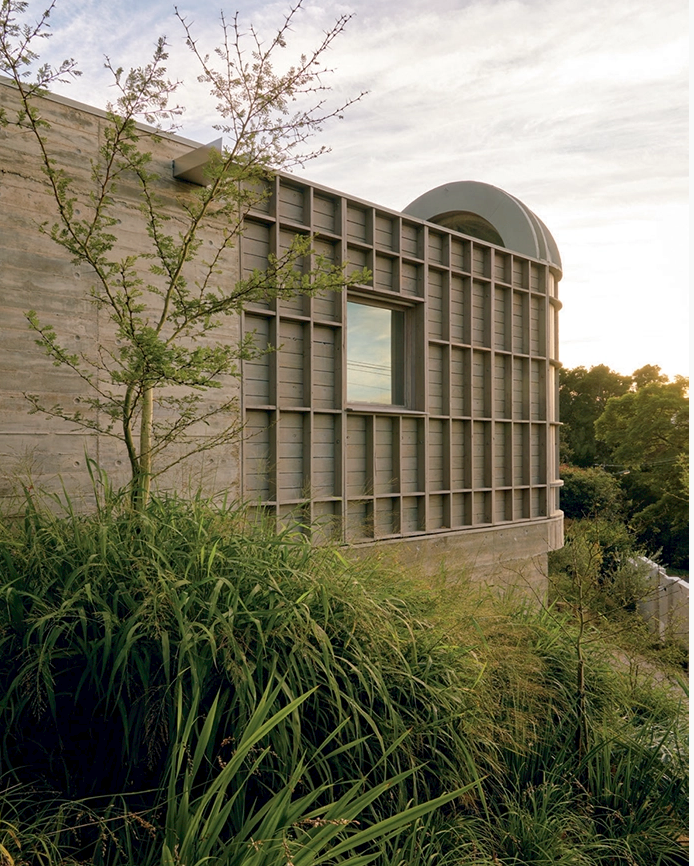
This concrete-and-wood residence’s design was informed by a set of logical principles that Johannes and Mayu work according to,rather than any visual reference.“We like to consider the potential in what already exists,” he explains. In the case of Pine Concrete House, what existed was the double-storey home of Johannes’s parents, Roland and Elmine. “The initial brief from them was to build a double garage – but like most projects, it grew,” says Johannes. “They are getting older, and because of the size of their house, we proposed renovating it so it could ultimately be split into three self-contained parts – a top half, a bottom half and an extension – so they would still be able to live there, but rent out the two other spaces.”“The decision to build with concrete is really what started the design. We asked: what is concrete? How do you make concrete? Okay, you need formwork. What is formwork? If you use wood to make formwork, what happens to it afterwards? Can you not reuse it? It’s a logic of being considerate and aware of things.”

Llandudno Home
There are 360 degrees. Why stick to one?” said the late architect Zaha Hadid – and this philosophy could well describe Mica and Marcel Angel’s Llandudno home. At its entrance, concrete slabs suspended over a body of water deliver you to a pair of angular, concrete planes that defy gravity as they slant casually skywards. The entrance is straddled by two linear concrete boxes, one of which is home to an outsised sculptural staircase that runs the full height of the double-volume space. It’s an astonishing first impression.But then this home is designed to marry not just the disparate aesthetic predilections of its owners but also the splendour of its setting. Set on giant granite boulders between Llandudno and Sandy Bay, it was designed by M&B Architects’ Christo Botha in response to its spectacular surrounds. However, his challenge lay in incorporating that with Mica’s preference for a more sculptural, eclectic, lived-in feel, as well as her brief for a space that could accommodate the five children (from 28 to 11 years old) and of course, their three dogs, Sishi, Valentino and Paris.

Salt Rock Home
It’s a great house to wake up in every morning, and a great house to dwell in,” says interior designer Lisa Twyman of her home. “It makes you feel free, positive, motivated, excited.”Lisa and husband Will Haynes fell in love with the plot situated in Salt Rock, on the Indian Ocean coastline north of Durban, because of its geography – so much so that the build became very much about the garden. “We did not want to impose on it or mess up the flow of it too much,” she says. “During the first few years that we lived here, any extra budget was spent on the garden and planting.”The key principle for Lisa and Will was that the house needed to become a part of the landscape. This meant including elements such as a ground-floor living area that opens up completely to the outdoors, allowing the spaces to be opened or enclosed as required. This “blurred boundary” – as Lisa describes it – between interior and exterior is further enhanced by the fully open-plan nature of the living, dining and kitchen spaces, as well as the application of simple, low-maintenance materials such as unadorned off-shutter concrete, and the balau wood used for cladding and screening where necessary.

Contemporary Pretoria Home
A newly wed couple found the perfect site in the heart of Pretoria – the first step to realising their dream – with the most incredible views across the Faerie Glen Nature Reserve. But it wasn’t until they met with architect André Eksteen from Earthworld Architects that they knew their vision would finally become reality. “We were therefore incredibly excited by the owners’ challenging brief for this unique site, because we knew from the start it would require pushing creative boundaries.”
True to his word, the main design concept for the house is a complete contradiction in terms. “I wanted to preserve the site’s intimate connection with the nature reserve by designing the house as an airy, lightweight shelter that simply floats over the indigenous landscape – with the structure being nothing more than a protective shell that can adapt from day to day according to the needs of the family,” André explains.
In Summary
If you are considering using this Raw and bold material for your next build, get an Architectural firm like Lenaneo Design Studio to assist you with your project.
References
Website – https://visi.co.za/concrete-homes-redefining-modern-living/